


Metformin is a biguanide drug primarily used as a first-line treatment for type 2 diabetes (T2D). It has gained attention for potential longevity and broader metabolic benefits beyond glucose control.

Metformin is a biguanide drug primarily used as a first-line treatment for type 2 diabetes (T2D). It has gained attention for potential longevity and broader metabolic benefits beyond glucose control.
Graham Healy
Med science degree
Wed 8/7/26
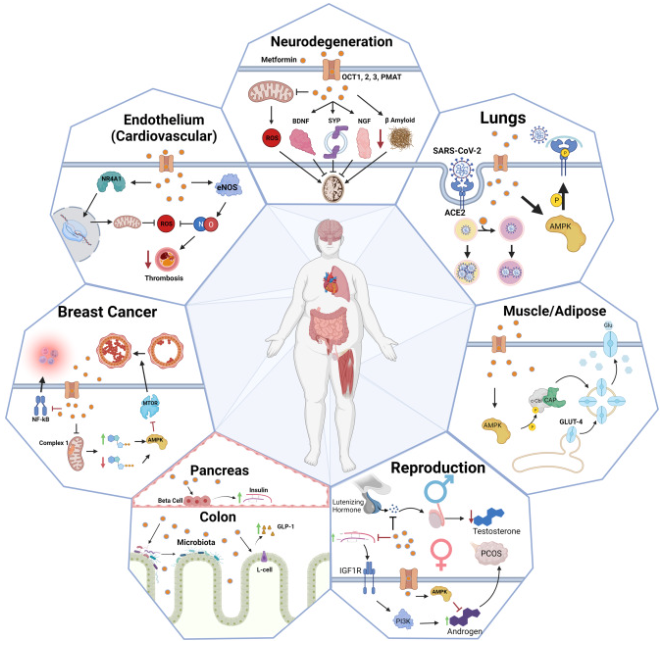
https://www.sciencedirect.com/science/article/pii/S0026049522001019 **Metformin** is a biguanide drug primarily used as a first-line treatment for type 2 diabetes (T2D). It has gained attention for potential longevity and broader metabolic benefits beyond glucose control.
### History
Metformin’s roots trace to the herbal medicine *Galega officinalis* (French lilac or goat’s rue), used for centuries to treat symptoms resembling diabetes. In the early 20th century, guanidine compounds from this plant showed blood-glucose-lowering effects. Guanidine derivatives (like synthalin) were tried in the 1920s–1930s but fell out of favor due to toxicity and insulin’s discovery.
Metformin (dimethylbiguanide) was synthesized and described in the scientific literature in 1922 by Emil Werner and James Bell. It was largely overlooked until the 1940s–1950s, when it was rediscovered during antimalarial research and tested for influenza, where it sometimes lowered blood sugar. French physician Jean Sterne pioneered its use in diabetes, publishing results in 1957 and coining “Glucophage” (“glucose eater”). It was introduced in France in 1957 and the UK shortly after.
Other biguanides like phenformin were more potent but withdrawn in many places (e.g., US in 1978) due to lactic acidosis risks. Metformin’s better safety profile allowed it to persist. Limited use in the 1970s–1980s gave way to resurgence after the UK Prospective Diabetes Study (UKPDS, 1998) showed cardiovascular benefits. It was approved in the US in 1995 and is now one of the most prescribed drugs worldwide (on WHO’s List of Essential Medicines).
### Longevity Studies and Verification
Observational data and animal studies suggest metformin may extend healthspan by targeting aging processes, though human longevity evidence is promising but not yet definitive for non-diabetics. Key points:
- **Animal models**: Metformin extends lifespan in some models (e.g., worms, mice) by mimicking caloric restriction effects.
- **Human observational data**: In T2D patients, metformin use links to lower all-cause mortality and reduced incidence of age-related diseases (cancer, cardiovascular disease, cognitive decline) compared to other treatments or non-users. It may benefit non-diabetics too in some analyses.
- **TAME Trial (Targeting Aging with Metformin)**: This ongoing/preparatory large-scale trial (led by figures like Nir Barzilai) aims to test metformin in ~3,000 non-diabetic adults aged 65–79 over 6+ years. Primary endpoint is a composite of age-related conditions (heart disease, cancer, dementia, etc.) rather than single-disease or mortality alone. It leverages metformin’s safety, low cost, and existing data; results could support FDA approval for aging indication if positive.
- **Other trials**: Smaller studies show effects on biomarkers of aging (e.g., epigenetic clocks). Evidence is mixed on cognitive benefits, with some positive signals in mild impairment.
Longevity benefits are thought to stem from metabolic improvements rather than a direct “anti-aging pill” effect. It is not proven to extend lifespan in healthy humans yet, and results may vary by dose, duration, and population.
### Effects on Metabolism, Cellular Health, and Overall Health
Metformin’s primary action is suppressing hepatic glucose production (gluconeogenesis) while improving insulin sensitivity in liver and muscle, without causing hypoglycemia or significant insulin secretion.
**Key mechanisms**:
- **Mitochondrial inhibition and AMPK activation**: Metformin mildly inhibits mitochondrial complex I (respiratory chain), raising AMP/ATP ratios. This activates AMP-activated protein kinase (AMPK), a cellular energy sensor. AMPK promotes catabolic pathways (fat oxidation, glucose uptake) and inhibits anabolic ones (lipogenesis, gluconeogenesis).
- **Reduced gluconeogenesis**: Via AMPK and other paths (e.g., inhibiting mitochondrial glycerophosphate dehydrogenase), it lowers liver glucose output.
- **Insulin sensitization**: Improves signaling, reduces lipid accumulation in liver/muscle.
- **Cellular level**: Enhances mitochondrial function/respiration in some contexts, reduces oxidative stress, inhibits mTOR (growth pathway), and may influence gut microbiota and inflammation. Effects can be AMPK-dependent or independent.
**Broader health benefits**:
- Cardiovascular: Meta-analyses show reduced CV events and mortality in T2D patients (independent of glucose lowering to some degree).
- Cancer: Observational links to lower incidence/mortality; potential via reduced insulin/IGF signaling, mTOR inhibition, and metabolic reprogramming (e.g., countering Warburg effect). Clinical data mixed; more trials needed.
- Other: Potential in PCOS (improves insulin sensitivity), modest anti-inflammatory effects, and possible neuroprotection.
### Fat Loss and Weight Management
Metformin is associated with modest weight loss (typically 1–3 kg or 2–6% body weight), especially in overweight/obese individuals, contrasting with weight-gain risks of some other diabetes drugs.
- **Evidence**: Diabetes Prevention Program (DPP) and follow-up showed ~2–2.5 kg sustained loss over years, correlated with adherence. Meta-analyses confirm modest BMI/weight reductions in obese adults and some pediatric populations. Effects are more pronounced with lifestyle changes.
- **Mechanisms**: Appetite suppression (possibly via increased GLP-1 or lac-phe, an “anti-hunger” molecule linked to exercise), reduced hepatic fat, improved energy balance via AMPK (increased fat oxidation, decreased lipogenesis), and slight calorie intake reduction. It may also promote brown adipose tissue activity in models.
- Not a powerful standalone weight-loss drug (e.g., compared to GLP-1 agonists like semaglutide), but helpful adjunct, especially in insulin-resistant states. GI side effects can contribute indirectly.
**Safety**: Generally well-tolerated; main issues are GI (diarrhea, nausea—often transient or mitigated by extended-release forms). Rare lactic acidosis risk (mostly in contraindicated cases like severe kidney impairment). Long-term use is safe for most.
**References** (key sources above; for deeper reading): Bailey CJ (2017) historical overview in *Diabetologia*; Rena et al. (2017) mechanisms in *Diabetologia*; TAME trial descriptions from AFAR and related publications; meta-analyses on CV/cancer/weight from various journals (e.g., *Diabetes Care*, *Metabolism*). Always consult a physician before use, as individual responses vary and it requires prescription. Ongoing research continues to explore its full potential.



Comments